Pages

Showing posts with label igf. Show all posts

Monday, January 16, 2012

SOPA Strike - Web Goes on Strike

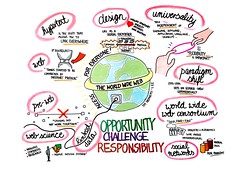
Tim Berners-Lee: The World Wide Web - Opportun...Image by Fräulein Schiller via Flickr
Though this bit of news will not be of much interest to many of the global Internet and World Wide Web audience that is currently trying to find out that who will be the next Miss America and Miss Wisconsin or what happened to the cruise ship Costa Cruises but still, the biggest websites on the Web are preparing for a strike! Yes the Web will be going on strike against SOPA.

As shared here on SOPA Strike website, on January the 18th there is going to be an all-out strike with websites across the Internet will be going totally dark protesting against the internet censorship bills currently being pushed in the US Congress namely SOPA and PIPA.

So far, many of the of the largest websites in the world are participating including but not limited to Reddit, Mozilla etc. with many more that can be encouraged to join through various other ways such as leading micro-blogging platforms and a popular collaboratively-written encyclopedia but still they need a bit of a a nudge.

If you want to keep the Internet and World Wide Web functioning and protect freedom of expression online, you must support the world's largest online Web Strike Against SOPA and blog, tweet, darken your website and share with your friends across the world through status updates on leading social media websites. This is for the world!

Tuesday, December 13, 2011

SMS Content Filtering in Pakistan - The Real Story and Way Forward!

Česky: Logo programu k posílání SMS zpráv Esms...
Image via Wikipedia
*Note: The research by the author has also been published first here:
"What the *&~#" -1500 obscene words to block from SMSs or just 12 - while the PTA has yet to make up its mind, social commentators marvel at the obscenity of the very idea By Alefia T. Hussain, (The Daily News Sunday Magazine, Pakistan online and print).

The recent news about Pakistan Telecommunications Authority PTA directive to filter SMS content and its sudden decision to withdraw SMS filtration orders drove the world media into a viral frenzy provoking questions such as why did PTA attempt this move in the first place, who ordered them to do it from the government, how did they come about deciding whether the technology to implement such a filter was even there or not and what do they intend to do now? Questions like these have been pouring into my inbox since the issue and as promised, I researched deep into this issue.

I am undertaking some important social, legal, political and technical observations in to account here based on both logic and fact.

There are a number of issues here with a diversity of views and certain technology constraints. SMS abuse, SMS based abuse and SMS Spam has been widely perceived as an increasing concern for both regulators and mobile/cellular/telecom service users globally. In the case of Pakistan Regulatory Authority’s recent directive on SMS based content filtering actually may go beyond these prevalent concerns.

This whole incident lacks basic research!
First of all, as far as my technical knowledge and experience is concerned, the issue has not been assessed in detail in comparison to any existing global example and lacks baseline research. Secondly, total and effective SMS based content filtering against a keyword or a list of keywords as of yet is really not completely possible technically and technologically unless PTA is encouraged to publish its findings and the technical specifications of this in cooperation with the local Mobile/Cellular Operators that how are they going to actually implement this directive.

What triggered it?
According to my initial understanding, this SMS Content filtering activity being carried out by PTA may not have been triggered by any political pressure, political motivations or directions by the Cabinet Division. In fact, the Cabinet Division may now and should be encouraged to explore the concerns raised after this news got out from domestic and global media channels regarding PTA’s sudden content filtering on SMS. Furthermore, the global social media volcano has also exploded with extensive analysis and monitoring of the situation backed by both criticism and ridicule after the news spread through the Internet like wildfire.

Becoming the 1st to do so!
From my global experience dealing with Digital Censorship and Content Filtering, PTA may become the first telecoms regulator in the world attempting to implement such an extensive Content Filtering activity on SMS especially in two different languages but in the same English language script. Not all such news in this case is good news and may have negative implications towards how such regulations and their enforcements are construed by both regulators and citizens.

Why did PTA do it in the first place? Complaints?
So far it is widely being perceived that PTA may have solely issued this SMS Content Filtering directive for implementation by Mobile Operators after receiving complaints from consumers of cellular services filed with the Customer Complaints section otherwise there would be no other official or moral grounds to carryout such an order.

I have observed with many SMS users in the past that they are fed up with the anonymous and abusive messages they receive usually targeted at female members of their families and friends. This is a moral question indeed but maybe for the society to deal with it, not a telecoms regulator which itself is bound to legislative and parliamentary policy.

Upon observing both the English and Urdu Language keywords to be filtered lists that have been widely circulated across the Internet by many local and global media sources, many of the words mentioned in the Urdu Keywords Filter List may actually be a cause for many of these consumer complaints. Yes they are highly abusive terms and morally degraded language possibly used with intentions not actually asserting their meanings but as dual meaning phrases but again these may be morally disturbing for many.

Wrong assessment with no expert grounds!
As there is no public consultation neither carried out by PTA nor any psychological assessments through any official medical sources, PTA may be challenged on its assessment of socially or morally abusive terminology and the tools or mechanisms it uses to weigh immorality or public order both legally and by civil society groups. There needs to be some form of evidence what construes socially or morally abusive in the first place.

Has it incited language abuse?
Most of the words in the English list are actually catalysts of inciting deep concern among a broad range of social actors across the country. This raises concern that who were the English language/lingo experts at PTA that devised these lists and that they may be requested to be brought forward for being questioned publicly or maybe a case should be initiated with the courts under various human rights concerns of preventing access to usual and normal daily English language communication words.

The Keyword Filter Lists in both English and Urdu may require a revisit as well as more research. From the lists that I have gone through, there are many spelling mistakes so it is also evident that when the list was put together, it was not proof read nor it was actually read in detail by the PTA higher-ups. This raises some public transparency and accountability issues around how PTA vets its own processes before issuing directives and enforcement. Public Sector institutions and especially regulators should be very careful in how they propose and display information to the citizens.

No Oversight or Monitoring? No Public Consultations?
In reality, the Cabinet Division should be encouraged to question PTA’s officials that had led the creation of such lists and both the English and Urdu Language/Lingo discrepancies. It may be worth noting here whether religious experts, minorities’ representatives, principal English and Urdu Language advisors were brought together into a committee before designing such a list that may trigger unrest across the masses of the country? Socially this would be properly contested by legislators and courts in more developed nations.

If we study any single sided process that does not involve multistakeholder and public dialogue or even consultation with the Cabinet Division before implementation, usually such a process may only be initiated with the mutual understanding between PTA’s Chairman, DG and Member Technical and the only grounds that so far may make this enforceable are user complaints filed with the User Complaints section of PTA. I would believe that a great deal of thinking and survey would go into before issuing and implementing such directives.

Where's the technology? What, no technology yet?
Technically speaking and for the information of the general public, the SMS Content Filtering will be implemented by filtering software at the Telecom Operators end that actually receive or process and transmit all the sms messages being sent out to their users. I would first like to reference what is an SMSC to understand this process.

Technical Jargon 
(source:wikipedia) When a user sends a text message (SMS message) to another user, the message gets stored in the SMSC (short message service center) which delivers it to the destination user when they are available. This is a store and forward option. A short message service center (SMSC) is a network element in the mobile telephone network which delivers SMS messages.

An SMS center (SMSC) is responsible for handling the SMS operations of a wireless network. When an SMS message is sent from a mobile phone, it will reach an SMS center first. The SMS center then forwards the SMS message towards the destination.    The main duty of an SMSC is to route SMS messages and regulate the process. If the recipient is unavailable (for example, when the mobile phone is switched off), the SMSC will store the SMS message. It will forward the SMS message when the recipient is available.

What is the Validity period of an SMS message? 
An SMS message is stored temporarily in the SMS center if the recipient mobile phone is offline. It is possible to specify a cutoff period after which the SMS message will be deleted from the SMS center. Once deleted, the SMS message will no longer be available for dispatch to the recipient mobile phone (even if it becomes online).

Accordingly, any SMS that is sent from any mobile user is first stored on the SMSC while its delivery is delayed for a few seconds. Then the Mobile Operator can implement a character string search to match keywords against the content of the message and block the delivery of matching content. It simply removes the words and may sometimes give the message “Some text missing” or may simply display some blank spaces for content blocked at the receivers end.

Logical and Technical Bypassing of such filtering!
What PTA may have failed to consider are the deeper technical issues associated with this content filtering activity? Currently SMSC does not have the capability to actually filter out non-alphabet characters. Wild cards such as ***** etc can be used to actually make the scanning software application skip virtually all the words in the list. This raises further concerns that why would PTA approach a SMS Content Filtering issue without first visiting the whole issue both technically as well policy implications-wise? Again this may raise issues of direct litigation of PTA.

Should there be SMS Content Filtering?
As a personal opinion, I would discourage any form of content filtering including SMS content filtering without public consultation. PTA must put into place processes before taking decisions that affect the user/consumers of Internet and Telecom Services that make citizens aware beforehand, educate them, receive and share public comments and then consult with legislators and policy makers the possible issues pertaining to implementation well before enforcement. Even for the current issue,

Lacking Multistakeholderism and Transparency?
In the true spirit of involving the citizens of Pakistan, PTA should have first convened the public including Civil Society, Private Sector, Academia, Public Sector and both Technical and Telecom communities into a multistakeholder dialogue and then discovered whether such an action was in the best interest of the public/citizenry at large or not and more importantly in the best interest of the country both domestically and internationally.

Still actions without appropriate baseline research?
Would such an action help everyone or would it only affect a handful few. PTA so far did not produce any baseline studies on number of SMS users, number of SMS sent per year, per month or per day. There is so far no record on its website about the number of complaints received by SMS users that received abusive content through the messaging service. There were no cell phone numbers blacklisted and published online as a warning. PTA also lacks inviting public comments before publishing of any content filtering directives through either newspapers or simply its own website.

What process? This is the way forward:
PTA should have possibly carried out a rightful and meaningful process before approaching this issue. Before issuing the directive, participation of the actual service users should have been invited and most importantly from SMS users. This could also have been initiated by a SMS to all mobile users so that at least PTA could understand and have figure of the number of service users interested in such an implementation.

PTA may also have attempted to launch a request for comments through either SMS on all networks or launched an online survey posted through its website. After a thorough study of comments from the public and especially SMS users, PTA should have first publicly shared its intent and then gone forward with official implementation once the public comment would have been positive.

The world went crazy because of us! Again?
This issue has really gotten out of hands. It is a global understanding across Internet and Mobile Technology Public Policy circles that any issue pertaining to digital content filtering is a very big threat to human rights and risks violating citizens’ state-recognized civil liberties including but not limited to free speech, press freedoms, right to privacy, right to religious views, and association. The current directive has been perceived both domestically and globally an infringement upon afore mentioned civil liberties of Pakistani citizens.

Help stop the threat of Content Filtering everywhere!
It is worth mentioning here that with the plethora of circumvention and censorship technologies available both free and commercially may encourage and actually trigger a competitive content filtering industry posing a major threat to the privacy and human rights of the citizens of Pakistan. SMS content filtering is an example of limiting or preventing access to our nation’s public communications infrastructure while it may also cause violation of an individual Pakistan’s fundamental right of freedom of expression and access to information.

Privacy Concerns
As far as privacy of Pakistani citizens in terms of SMS usage is concerned, PTA should consider ensuring preservation of Privacy and the current threat around this directive is that that SMS Content Filtering Directive gives all Mobile Operators the unprecedented and uncontestable right to expose user SMS content to third party and third party applications and in this case the Mobile Operators themselves to tamper and obstruct user generated content transmitted in a private manner. Basically PTA may have failed to realize what it is unleashing from its basket of regulations.

Global example of networked ridicule!
Finally, I am of the understanding that so far none of the Telecom/Cellular/Mobile Operators have actually implemented this directive whereas PTA should also take some more time to reconsider the enforcement of its directive despite withdrawal. The oceanic wave of criticism and ridicule generated both domestically and by the global media may actually provoke reconsideration whether such a directive should be actually and fully enforced or not.

From wider discussions during various interactions with the technical and general community, it is perceived that PTA may have taken actions in the past that have actually sent out a message locally and globally raising eyebrows displaying lack of multistakeholder involvement and general public consultation while devising and implementing its telecoms related regulatory enforcement activities especially surround Internet Content Usage and now issues pertaining to SMS content sharing.

Stop scaring our own poor citizens!
It is advisable for PTA that it should work towards facilitating the citizens of Pakistan and not provoke inciting threats and fear because digital communication both on the Internet and through Mobile Technology is the backbone of all social, economic and democratic activities in Pakistan and a fundamental citizen’s right to access information today.

Sleep on it!
There is a further need to create Internet and Mobile Technology Consumer Rights Groups in Pakistan that can have open and direct dialogues with PTA without feeling threatened or pressurized by the authorities so that transparent and accountable activities can be implemented by the regulator while helping and informing PTA before it attempts to create the global chaos and unneeded attention it has recently created through this directive. The regular public monitoring of PTA is in the mutual benefit of all Pakistani citizens as well as the regulator.

Thursday, July 14, 2011

.pk State of the Pakistani ccTLD Domain Report from Pakistan

Graph of internet users per 100 inhabitants be...Image via Wikipedia
The Pakistani ccTLD .pk domain is a critical Internet resource for Pakistan. Established in 1996 by two Pakistani entrepreneurs and scientists settled abroad in the US, the .pk infrastructure has grown to host an approximate of 36893 .pk domains as of 13-07-2011 for the 6th most populous country in the world.

 I have occasionally shared in my research and presentations that for any country, its country code top level domain (ccTLD) represents its citizen's confidence and trust in their country's critical Internet resources, represents their participation in the information society and knowledge economy. It also determines the rate of online or Internet based innovation in all social, political and economic spheres of life for that region.

The State of the Pakistani .pk ccTLD:

.pk domains registered as of 13 July 2011:  36893 .pk domains

*** Irfan Ahmad's .pk domain registration analysis ***
Irfan Ahmad, a Pakistani Entrepreneur (profile) recently posted his statistics and analysis of the state of the Pakistani ccTLD on his blog here presenting very interesting facts and figures. According to Irfan, approximately 50% of the registered domains are .com.pk whereas 33% represent .pk registrations, 2103 are .org.pk, 1966 are .edu.pk and 1163 are .net.pk.He further distributes the Pakistani federal government and provincial government ccTLD usage as follows:
  • Government of Pakistan has 766 .pk domains
  • Government of Punjab has 121 .pk domains
  • Government of Sindh has 68 .pk domains
  • Government of Kashmir has 14 .pk domains
  • Government of Baluchistan has 8 .pk domains 
  • Government of KPK has 5 .pk domains registered.
The .pk ccTLD has also issued .biz.pk, .web.pk and .fam.pk as follows:
  • .biz.pk 196 domains
  • .web.pk 121 domains
  • .fam.pk 12 domains
.PK Yearly Growth Pattern
As far as the .pk domain registration growth pattern is concerned, Irfan maps out the yearly growth pattern through the following infographic that has shown a significant increase of domain registrations and interest from 2008 onward representing increased awareness and adoption among Pakistani Internet users, entrepreneurs that are both local and international companies doing business in Pakistan.

.PK Top 20 Pakistani Registrars
According to Irfan's analysis of the Top 20 Domain Registrars, Nexus Technologies, an Islamabad based company that has offices in almost all major cities stands as the leader registering around 2126 .pk domains. The closest competitor is Websouls and the public sector ISP COMSATS is third. Brain Telecom one of the oldest ISP players in the market also boasts a significant number of .pk registrations. Though ServerSea Hosting leads in the top level domain registration market in Pakistan, it sits very low in the chart given by Irfan.

Summarizing some occasional points I make during my work:
  1. Domain names managed by ICANN are divided into 2 major categories. First the gTLDs or “generic top-level domains” and secondly the ccTLDs or “country code top level domains” which represent a country level designation.
  2. Each country recognized by the United Nations has a country code top-level domain based on the ISO Standardized country code name that is a two letter character.
  3. A ccTLD provides regional credibility on the World Wide Web and or Internet for a country and its citizens.
  4. The ccTLD for Pakistan is .pk that was established in 1996.
  5. A ccTLD represents the nationality of an individual, group, community, society, organization, company and government. 
  6. A ccTLD helps in identifying the source of communication and helps develop a trust relationship.
  7. A ccTLD website may or may not be physically located within the country represented by it.
  8. Every country carries its own specific guidelines for the use of its ccTLD.
  9. In some countries and regions like the Canada .ca domain or European Union .eu domains are only available for Canadian or EU based companies and individuals. For any Canadian individual or business, they must meet Canadian Presence Requirements here in order to register a .CA.
  10. Some countries like Colombia .co and Micronesia allow anyone from anywhere to register ccTLD domains
  11. ccTLDs help its registrants in avoiding obscure wording and misleading domain names
  12. ccTLD restrictions on who can buy a ccTLD helps registrations in securing reliable and user-friendly registry
  13. ccTLDs promote the distance from the global market helping registrants offer more personalized customer care 
  14. ccTLD based regional/country identification as well as branding helps registrants to take advantage against being lost midst other saturated domain name extensions.
  15. ccTLD also helps in localizing the location on the web. It may be prudent that for certain forms of content, ccTLD domains help find the required local content on any given subject or entity.
  16. ccTLD's are managed as companies, public-private partnerships or by academic or research institutions. 
  17. The value of a ccTLD can be linked directly to that country’s economic and investment environment. Its growth represents its participation in the local and global Knowledge Economy, the participation and trust of its citizens in its Information Society as well the quality and growth of Knowledge Workers in the region  though that is not the scope of this discussion.. 
  18. Lower rates of ccTLD registration can also be linked to brain drain in certain cases though that is not the scope of this discussion. 
  19. Most of the successful and high-growth ccTLD's are the ones managed through Public-Private Partnerships for example the Indian ccTLD .in is managed by the Public-Private Partnership called NIXI here that is amongst the fastest growing ccTLD in the world approaching nearly one million .in registrations.. 
  20. The .PK ccTLD is a privately held entity.
References:
  1. ICANN: http://www.icann.org
  2. PKNIC Registry: http://www.pknic.net.pk
  3. Irfan Ahmed's PKNIC Domain Registration Statistics: http://i.com.pk/pknic-domain-registration-statistics

Thursday, January 20, 2011

Bill Clinton to speak at ICANN's Silicon Valley Public Meeting in March 2011

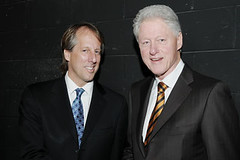
Rod Beckstrom and Bill ClintonWilliam Jefferson "Bill" Clinton, 42nd President of the United States, with Rod Beckstrom, ICANN President and CEO. icannphotos
As the Internet community gets ready for participating in ICANN's 40th Public Meeting taking place in San Fransisco from March 13-18, 2011, there is confirmed news that President Bill Clinton will also be participating in the meeting as a speaker. Scott Pinzon at ICANN posted this news on January 13th, 2011 on the ICANN blog stating "Bill Clinton and the ICANN Silicon Valley Meeting." here.

Scott confirmed that:

"A few blogs and a swarm of tweets have announced that former President Bill Clinton will speak at ICANN’s Silicon Valley-San Francisco public meeting in March. Some are asking why ICANN hasn’t announced this yet. While it’s true that we have invited and he has accepted, we’re still working on a contract, and without it a formal announcement cannot be made. We are also aware that ICANN meetings are highly structured, work-intensive events, and we want to be sure that an appearance by President Clinton enhances the meeting’s outcomes rather than distracts from them."

The most important addition to this story were the rumors that ICANN, a non-for-profit organization and custodian of the technical coordination of the global Internet root and IP addressing was going to end up paying half-million and million-dollar figure to President Bill Clinton have all been declared false way out of line.

Antony Van Couvering has spin off information about this through an article he posted on CircleID here "Confirmed: Bill Clinton to Address ICANN Meeting in SF" on Jan 13, 2011. According to Antony, Bill Clinton's presence will generate inevitable tech press that will be really beneficial for both ICANN and the Silicon Valley.

Antony also showed his skepticism over the overall issue of having an ICANN Public Meeting in the Silicon Valley, where all those companies reside including giants like Facebook that are changing the global Internet landscape and how the world uses the Internet. Well I don't blame him, ICANN really has been moving at a snail's pace with on-going issues like the ten year delay in launching IDNs' Internationalized Domain Names and now the trouble with launching Generic Top Level Domains. I won't go with the claim about the GAC and its pressures on ICANN, I still cannot recognize that as to exist because what the governments did with the Internet Governance Forum improvements issues upon the renewal of its five year mandate tells a whole different story.

I personally believe that its time for ICANN to actually announce and launch the new gTLD program at with what ever the state of the gTLD applicants guidebook because unless you don't test the ground, how do you know what worked and what didn't and improvements can take place on an on-going basis for the intelligent!

Sunday, January 2, 2011

Internet Governance Forum IGF Mandate Renewed from 2011 to 2015 - UN renews the IGF mandate for another five years!

Picture taken at the IGF, Internet Governance ...Image via Wikipedia
The IGF mandate renewal news has yet to be formally confirmed and announced by the United Nations but I suppose that this delay is due to the holiday season  but it stands accurate and stakeholders should hear about it in a day or two.

The United Nations General Assembly has approved the renewal of the IGF Internet Governance Forum mandate for a period of another five years from the year 2011 to 2015. This year in 2011, the IGF will probably be hosted by Kenya at the United Nations office in Nairobi in September 2011 but there is no official announcement from the United Nations headquarters in New York on this.

The 2011 IGF Open consultations and MAG meeting will be convened in Geneva on 23 and 24 February 2011. The MAG meeting will be open to observers in accordance with a MAG decision taken during November 2010's last meeting while all its proceedings will be webcasted and made available as real-time transcriptions.

The final meeting within IGF's first mandate was hosted by Lithuania in the city of Vilnius during the third quarter of last year in September 2010 where a strong level of support was made for IGF's mandate renewal and its continuation in its current format with a certain amount of improvements in terms of what could be possible outcomes or ways it could affect global Internet Public Policy making. The issue of being able to make recommendations in some form remain as one of the key weaknesses of the IGF mainly due to the pressure from certain stakeholder groups participating in the IGF process.

IGF with the support and cooperation from its multistakeholder participation model has been successful in finding an innovative format for meetings bringing together all stakeholders to discuss public policy issues in a climate of trust of confidence. The annual meetings during its mandate's first cycle from Athens to Vilnius emerged as a platform to exchange ideas and information while sharing experiences and good practices. The IGF has been able to attract considerable attendance as well as attempted to improve increased remote participation but the challenge of getting the real voices from the developing world remains one of its greatest challenges.

The renewal of the IGF mandate for another five years from 2011 to 2015 brings a new set of issues and challenges that have already struck IGF multstakeholders and the global Internet community as is evident from the recent news and activities within the United Nations circles. It was believed for five years that this forum's new model of cooperation where governments accept non-governmental stakeholders as equals continued to evolve but many stakeholders believe that the concept of multistakeholderism was mulled during the December 2010 CSTD consultations in New York and Geneva were taken over by intergovernmental forces. This issue is still evolving but I have described this in detail in previous posts but the fact remains, there is no such other Internet forum at this global scale.

There is a smaller non-treaty and non-governmental model for only one function of Internet Governance, i.e. the technical co-ordination of the Internet Domain Name System, Root and IP Addressing, present independent of the IGF. This model is convened by a non-profit global multistakeholder model in the form of ICANN Public Meetings.  that take place thrice around the globe and are open to all internet users, technical community, governments, research, academia, civil society and private sectors, literally to anyone and everyone.

As the General Assembly extends the IGF mandate for another five years, we the stakeholders of this important global forum are to witness a bumpy rocky road trip. Various stakeholder groups that have always attempted to prevent the IGF and the MAG from reaching consensus to approve issuing some form of outcome, recommendations or messages (the EURODIG - European Dialogue on the Internet Governance issues messages as an outcome) found that they had shot themselves in the foot when the governments suddenly ruled out participation of other stakeholder groups from the New York consultations.

This was a message to the world and the IGF community that Internet control is what some and most governments want as well as see the IGF to take that form and there has to be a renewal of strategy by all stakeholders to counter this perception if we want a sustainable, open, inclusive and neutral Internet to exist for us and our future generations.

Sunday, December 26, 2010

Governments dominate the Internet Governance Forum Improvements Working Group by CSTD

This is the final report by the Chair of the United Nations Commission on Science and Technology Internet Governance Forum Working Group here:

On page 2 of articles 8 - 9, the report states that:

“The Chair of the CSTD establishes  a Working Group of 15 member states plus the five member states which  hosted the IGF meetings plus the two member states which hosted WSIS.  This Working Group will seek, compile, and review inputs from all member states and all other stakeholders on improvement of the Internet Governance Forum, in an open and inclusive manner throughout the process.

The Chair invites the following stakeholders to interactively participate in the
Working Group, bearing in mind the established rules of procedure of the
ECOSOC, who will remain fully engaged throughout the process:


Pursuant to the ECOSOC decisions 2010/226, 2010/227, and 2010/228, maximum possible assistance, diversity of ideas, and equal representation of stakeholders from developing and developed countries in the Working Group should be ensured in consultation with the stakeholders.

The report of this Working Group will be adopted by consensus.”


Thursday, December 23, 2010

Is the United Nations taking over the Internet? No way and how-to get the facts right!

Emblem of the United Nations. Color is #d69d36...Image via Wikipedia


Within the recent Internet Governance debates, I have been amazed, bewildered, disappointed and confused by the way things have flipped and slipped out of the hands of various stakeholders over a bit of gossip and disoriented discussions triggered after the United Nations led consultations on Enhanced Cooperation and Improvements to the Internet Governance Forum once the mandate is renewed.

These closed intergovernmental working group meetings resulted in media reports claiming that the United Nations could take over the Internet or was attempting to regulate it which was more or less a bunch of ho as there are working groups talking about it in intergovernmental silos without full multistakeholder participation and these governments at the moment have little or no power to do so. They may only have some capability to regulate the IGF at the most and from my experience, the governments lack participation within the IGF and the ones that do so are not representatives of all the governments of the globe.
The handful governments that have suddenly shown up in these consultations are mostly representatives of permanent missions of various countries appearing at the UN offices in New York and Geneva. Most of them are the ones that I have never seen participating within any IGF open consultation or the global forum itself held each year.What does this mean? It means these are the usual Proxy attendees! The suited booted folks that sit in for other folks that would sit in for others and so on. No experts, no Internet gurus, no one actually trained to deal with Internet related public policy issues, mostly political appointees that will soon be sent off to other countries as part of their career foreign diplomat postings. The ones that have Internet related experience are mostly the ones with representatives present and taking part in the discussions held within the IGF Multistakeholder Advisory Group (MAG) and most of the Open Consultations held three times a year in Geneva.

One thing for sure that the IGF has no powers to interfere or stimulate any Internet policy whether global, regional or at any country level. It remains a fact that despite there are a lot of discussions in IGF main sessions and workshops around Internet related issues prevailing within developing and developed countries including topics concerning anything from Internet public policy, access to openness, security, critical Internt resources, Internet Governance for Development, cybercrime, cross-border information sharing, child protection, human rights, information intermediaries, ICANN, ITU and so forth, the forum is just a space with the mission for encouraging  "discuss," "facilitate," "advise," "identify," "promote and assess." and thats about all that happens there. There is no power in this system. Its not even a fully developed system.

A process that has no International Treaty or Multilateral Negotiated Agreement to mandate the provision of power to regulate or control anything to any body including the United Nations cannot do anything and such is the IGF today despite all the Enhanced Cooperation facilitated by as many working groups meetings and negotiations that can ever happen.

I have a very simple way of viewing the world. I see things by examples. Show me a basic example where these governments have agreed on one common principle of human understanding and respect?


If I just look at what the world including UN member country governments have done so far with recognizing and implementing the Universal Declaration of Human Rights (UDHR) that  was adopted and proclaimed by the General Assembly of the United Nations on December 10, 1948, I wouldn't worry at all about the same folks trying to control the Internet.

They cannot do it. They could not sit together to accept, recognize and implement the UDHR throughout these 62 years and we see them everyday continuing to violate basic human rights throughout the world in virtually every country and still someone would expect people to believe that today they would sit together and discuss and agree together to control the Internet? Yeah, right! Really, this is totally hilarious! Thumbs up to all the media that reported all this UN domination of the Internet news in the first place, you folks really don't follow developments in the Internet Governance world as you used to, right?

In my personal opinion, I see the Internet to have been built by human beings, not governments. Human beings continue to build and use the Internet today, and yes, its a result of sheer human intelligence and human potential. I would like to point you to what one of the father's of the Internet, that is, Vint Cerf, recently said on his blog while fuming over these UN working group proceedings here that:

"The beauty of the Internet is that it’s not controlled by any one group. Its governance is bottoms-up—with academics, non-profits, companies and governments all working to improve this technological wonder of the modern world. This model has not only made the Internet very open—a testbed for innovation by anyone, anywhere—it's also prevented vested interests from taking control." - Vint Cerf.

This disappointing and confidence shattering move by the United Nation's Commission on Science and Technology (CSTD) has been severely condemned by the Internet Governance Caucus of Civil Society Organizations (IGC), the Internet Society (ISOC), the International Chamber of Commerce (ICC) and tons of other organizations resulting in the publishing and forwarding of a joint letter here to the United Nations and Chair of the CSTD as well as an online petition here to mobilize global opposition and to send a message to the CSTD  ensure that Internet governance remains open and inclusive.

All these stakeholders have joined hands to ask the Secretary-General of the United Nations to set up a working group on Internet governance, in an open and inclusive process that ensures a mechanism for the full and active participation of governments, the private sector and civil society from both developing and developed countries, involving relevant intergovernmental and international organizations and forums, to investigate and make proposals for action. I believe in and support this call as the IGF was set-up as a multistakholeder driven forum and not an intergovernmental setting.


In response to this joint letter, Mr. Fédéric Riehl, the Chair of this silo working group responded that:

“Thank you for your mails in which you express your concern about the decision on the composition of the Working Group of the Chair of the CSTD on IGF improvement.


First of all, please let me correct you in the following: The meeting on Dec 6 was not a meeting of the Bureau of the CSTD, but it was a meeting to which all members of the CSTD were invited. Attached you find a summary of this meeting which has now been made publicly available on the CSTD website (http://www.unctad.org/cstd).. As you can see in this summary, there was a very clear majority in that meeting that led to the decision which was taken.


What the meeting of Dec. 17 in Geneva is concerned, this meeting is a part of the CSTD intersessional meeting and will be open not only to the members of the CSTD, but also to other states and to civil society and business representatives who have been accredited to WSIS. For other business entities not accredited to WSIS but wish to participate, please get in touch with the CSTD secretariat for further information.”


Despite the above letter, we currently stand at the following text and structure reported by one of the participants from ICANN present at the working group meeting on 17th of December 2010:


"Final Text:


The Chair of the CSTD establishes a Working Group of 15 member states plus the five member states which hosted the IGF meetings plus the two member states which hosted WSIS. This Working Group will seek, compile, and review inputs from all member states and all other stakeholders on improvement of the Internet Governance Forum in an open and inclusive manner throughout the process


The Chair invites the following stakeholders to interactively participate in the Working Group, bearing in mind the the established rules of procedure of the ECOSOC, who will remain fully engaged throughout the process:
  • 5 Business community
  • 5 Civil society
  • 5 Technical and academic community
  • 5 Intergovernmental organizations
Pursuant to the ECOSOC decisions 2010 226, 2010 22, and 2010 228, maximum possible assistance, the diversity of ideas, and the equal representation of stakeholders from developing and developed countries in the Working Group should be ensured in consultation with the stakeholders.


The report of this Working Group will be adopted by consensus."

So much for multistakeholderism and the approach of having 5 people from a stakeholder group as representatives of all the voices of Internet users, consumers, producers and surfers from all the continents and countries of the world.

It can be noted for future reference that the IGF has so far met five times around the globe from Athens, Rio de Janeiro, Hyderabad, Sharm El Sheikh, this year within Vilnius but it has never been allowed to share messages, give recommendations or facilitate any kind of policy formulation for the control, regulation and .governance of the global Internet. It also remains as a factual message to both the United Nations and the governments that they should all ensure an Open and Inclusive Approach to Internet Governance and stop day dreaming about controlling it!

The CSTD literally has no powers. It can talk and talk making resolutions but there are hardly any substantial proof of outputs from this forum. I have been there, I have given a speech there last year to a full forum that originally had come to believing that Mobile Phone Technology was the best thing that ever happened to the world giving them all their citizenry all the basic facilities of life etc and I must say, these CSTD folks really have to get their act together and understand what Multistakeholderism is and what it really means to the world and IGF stakeholders.

Wednesday, November 25, 2009

Example of Corporate Internet Authoritarianism - Amazon does not allow Pakistan to download Kindle Software for PC's

*Access Denied to Pakistan by Amazon.com!
I would like to share an example of how Corporate Internet Authoritarianism may affect us from the developing world that I recently encountered. The case presented is that Amazon.com's Kindle, an e-book reader device available for - Amazon does not allow Pakistan to download Kindle Software for PC's. The IGF in Sharam El-Sheikh was a very fascinating event. Apart from the many issues and arguments that arose this year, the participants displayed use of some fascinating devices for recording or following through the proceedings that many of us developing world people have neither seen nor have access to. The major fascination for me was from small FLIP HD Camcorders and various types of E-book Readers. During the IGF or while flying over to the event, I saw many kinds of wireless e-book readers like Amazon.com's Kindle and some other European models in the hands of people from the developed world. Upon asking them the price of their devices they were all US$300 and above. Click here for the link to Amazon.com's Kindle.
Bringing my fascination of Wireless E-Book Readers back to Pakistan, I have been trying to figure out how do various e-books and reports appear on an e-book reader and whether some special format is required to view books on such readers. I attempted to access the report "Informing Communities: Sustaining Democracy in the Digital Age (Kindle Edition) by The Knight Commission on the Information Needs of Communities in a Democracy" through Amazon.com Kindle version.  
In order to read such a report on a Kindle device without a Kindle, one has to have the Kindle E-Book Reader software installed on their PCs. The following is the message that was displayed on the link given below in a test attempt to download the Kindle Software for my PC in order to read the Kindle version of the report "Informing Communities: Sustaining Democracy in the Digital Age (Kindle Edition) by The Knight Commission on the Information Needs of Communities in a Democracy":  
  1. For the Kindle Software Link, click here.  
  2. For Knight Commission's Report Link, click here.  
  3. Kindle Software Denial Link, click here.  
Resulting Message on Amazon.com Kindle Software Download Page: 
"We're sorry. Kindle for PC is not currently available in Pakistan. 
Are you traveling outside your country? 
Sign in to see if Kindle for PC is available for download in your country. 
›Continue shopping the Kindle store"
The print screen of this message is given below. Would this mean that if I actually had a Kindle, I would not get support for it or would not be allowed to have a PC version of the Kindle software program? Interestingly Amazon.com allows you to continue shopping but doesn't allow Pakistani's to download the Kindle Software. Isn't that a wonderfully incredible approach from the one of the world's e-commerce giants that continue to contribute to increasing the digital divide over software offerings that they give in the developed world for free but we from the developing world cannot access it!

Saturday, November 14, 2009

In Sharam El-Sheikh for the IGF but without luggage - Yeah Emirates Airlines lost it from Dubai to Cairo!

Yes, I made it safely to Sharam El-Sheikh yesterday evening but without any luggage. The credit goes to Emirates Airlines that has done this with me twice this year now, last time while returning to Pakistan from the IGF consultations in Geneva in May 2009. The carrier lost 650 bags including the luggage of many other IGF participants travelling that particular flight. Imagine, you just load a hundred bags when you are carrying more than 200 passengers and the flight took of with a delay and arrived in Cairo with a delay. Pathetic! It was a huge chaotic situation at Cairo Airport when over more than a 150 passengers were at the luggage complain counter bashing the three poor Egyptian Ground Staff Emirates Airlines.

This stupidity in my personal opinion is my worst luggage loss because I have got nothing else to wear during the IGF as well as missing some of my important documentation for the meeting. Emirates Airlines is really really loosing its personal and responsible touch I used to confide in during the past 5 years. I would now prefer Etihad Airlines for any of my future travelling because they have become what Emirates was as the number one airlines in the region. Okay the Abu Dhabi Airport facilities are not as hip as Dubai Airport but still they are a responsible airliner.

On my way back I have an Etihad booking already arranged. Well, apart from the crying business over my luggage, the pre-IGF day has started with ISOC IGF Ambassadors Meeting on the 14th of November and I have been able to interact with some new wonderful people as well as meet up with old friends. So far so good without the luggage, interesting. Okay I am frustrated like many other people that lose their luggage on a daily basis across the world but I will get over it as I get busy over the day till the moment I have to get the same pair of clothes washed for tomorrow.

Thursday, November 12, 2009

All packed and ready for IGF'09 in Sharam El-Sheikh & a bit about Internet Rights at the IGF

I am all set to head down to Sharam El-Sheikh from Lahore, Pakistan to attend the UN IGF 2009 within a few hours and wanted to share this post before heading off to the Airport. Going through the work that we at the MAG (Multistakeholder Advisory Group) had accomplished so far in organizing the current IGF, I was reflecting upon the fact that the event this year should have carried a main session in the main program on Internet Rights or simply said, Human Rights on the Internet. Why? Well if you look at the global trend, it feels like that a year or two back, we Civil Society people were nuts beating the Human Rights Declaration drum to recognize it over the Internet but now we see the debates surrounding rights on the Internet popping up literally in every continent of the world.

In my opinion, the recent stances on Internet related Human Rights adopted by the European Commission and the European Council on different occasions signify the importance of this issue as a basic right that has to be recognized by hook or crook otherwise future Internet Public Policy making will be facing a great deal of hurdles. Within the context of IGF, I am still very optimistic that with the discussions and evaluations of its continuation, the IGF will face some immediate and important transformations that will bring into focus the issue of Human Rights and the Internet.

Before ending this post, I would like to congratulate everyone in the IGF Internet Rights Dynamic Coalition for the wonderful work they have put into redraft and improve the previous Internet Rights Charter released by the APC, the Association of Progressive Communications. When the Dynamic Coalition met earlier this September in Geneva at the European Broadcast Union premises, it was unanimously decided that the Human Rights Declaration should also be recognized on the Internet and where necessary, suggestions should be shared for its lingo. Now looking at the final Internet Rights Charter draft that will possibly be released during the current Internet Governance Forum in Sharam signifies the importance of the Human Rights Declaration within the context of the Internet. Cheers!

Wednesday, November 11, 2009

Global Voices Online not accessible anymore in Pakistan

Either this is some kind of technical issues with my DSL Internet Service by CyberNet in Pakistan or it's true that I cannot access the Global Voices Online blogs from my country. For those that might know, Global Voices Online is an international network of bloggers and citizen journalists that follow, report, and summarizes what is going on in the blogosphere in every corner of the world. It's a non-profit website and/or project started by the Berkman Center for Internet and Society at Harvard Law School, growing out of an international bloggers' meeting in December 2004, and is founded by Ethan Zuckerman and Rebecca MacKinnon.

Okay so its clear we've seen lots of other websites getting censored and banned in this region but I am feeling rather disappointed after I've find out this while trying to seek people's comments from around the world on the Internet Governance Forum IGF2009 taking place next week in Sharam El-Sheikh Egypt that I too am attending. There must have been some interesting discussions on the Global Voices Online blogs that I could have read and shared at the IGF.

The last resort I have now is to use Google's or some other website's online blog feed reader to read what's happening at the Global Voices Online website with regards to the IGF'09. If you scroll down this blog page, you will see posts from some of the blogs that I am following and find the first update from Global Voices Online. These bans Uhhhhh!

Need to further bridge the dialogue between IGF and ICANN

I've been amongst the few people that have attended both the IGF and ICANN meetings and my understanding of issues pertaining to Internet Governance have been enlightened to a great extent. After participating in the IGF Open Consultations twice, the WSIS Forum and the 12th Session of the Commission on Science and Technology, United Nations, I felt a strong need to see with my own eyes and participate with what goes on in ICANN to explore what all the rhetoric has been about. Interestingly, consider it a wish come true when I received a fellowship to attend ICANN's 36th International Meeting in Seoul, Korea that helped me to understand what all the chaos about ICANN has been within the IGF multistakeholder circles.

From what I have perceived so far, its about realizing what needs to be done according to the needs of today within a very interconnected and decentralized world of communications. ICANN is a governance system that is in transformation that needs a lot of improvements. It needs to interact more within the Internet Governance community despite the fact that it has a multistakeholder advisory and consultation model in place but it itself is not the only caretaker of the Internet. I must admit that I have had mixed feelings though, a few that the staff composition of ICANN is not multistakeholder within the sense of having lots of people from the developing world on staff. Secondly the board composition also lacks a great deal of developing world composition. Similarly too much contracting is being done with host country companies and institutions from the developed world.

There are a lot of things to share and further explore from this point onwards and that's where the motivation to create and run this blog specifically on international Internet Governance came to my mind. I will be commenting on the state of Internet Governance on a regular basis on this blog including coverage of the actual meetings of the United Nations organized Internet Governance Forum and future ICANN meetings taking place. I am also in the process of creating a constituency under the NCSG Charter of the ICANN so I will keep my readers posted. Yes, this is a very practical blog on current issues in Internet Governance.